Curbless Showers: Why Barrier-Free Design Makes Sense for Everyone
The curb on a shower — that short wall you step over to get in — has always been a compromise. It’s there to contain water, but it’s also a trip hazard, a cleaning challenge, and an obstacle for anyone with mobility limitations. The curbless shower eliminates it entirely, and the result is a better shower by almost every measure.
How a Curbless Shower Contains Water Without a Curb
Without a curb, water containment depends on the floor slope, the placement of the drain, and the positioning of the glass. A properly designed curbless shower slopes toward the drain from all directions (or in a single direction with a linear drain), directing water away from the bathroom floor. A well-positioned glass panel keeps spray contained without requiring a physical barrier at floor level.
The Accessibility Argument
A curbless shower is genuinely accessible for anyone using a mobility aid. There’s no barrier to negotiate, no step that can catch a walker wheel or a foot in a bad moment. This makes curbless design valuable for aging-in-place purposes — and it costs nothing extra to design this way from the start rather than retrofit it later.
The Design Argument
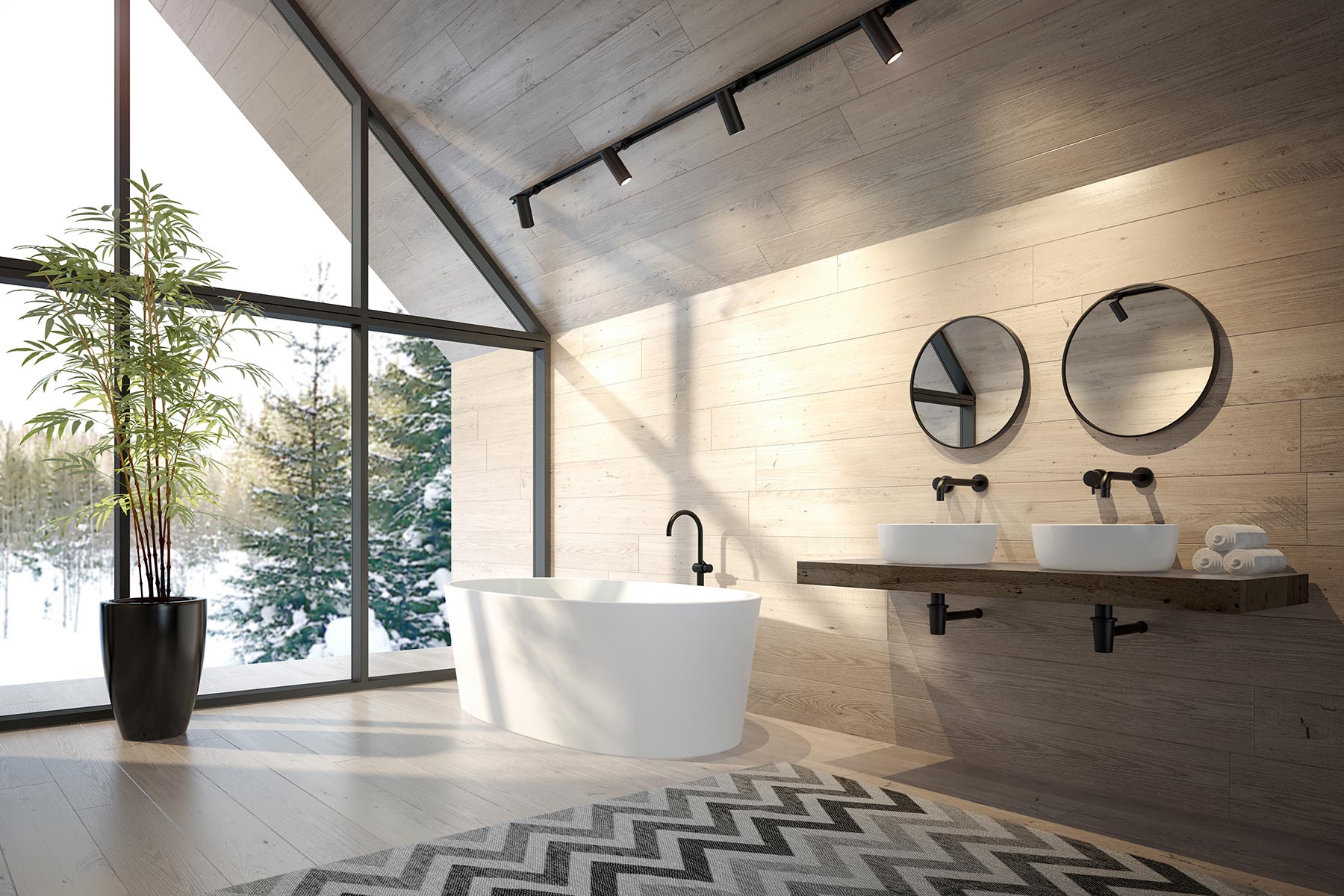
Beyond accessibility, curbless showers simply look better. The visual continuity from the bathroom floor into the shower creates a spa-like quality that a curbed shower can’t replicate. Paired with a frameless glass enclosure from Fleurco, the effect is open, light, and genuinely luxurious.
What Curbless Requires
A curbless shower requires careful floor preparation — the shower floor needs to be at the same level as the bathroom floor, with a transition in material but not in height. This is easiest to design from the start of a renovation. Adding it to an existing shower is more complex.
Ask about curbless shower design at Vanity Mart’s Waterloo showroom at 1-90 Frobisher Drive. Call 519-886-3240.
Kim Savauge
Testimonials
“Lorem ipsum dolor sit amet, consectetur adipiscing elit. Ut elit tellus, luctus nec ullamcorper mattis, pulvinar dapibus leo”
Martin LukeCEO, Colibri
“Lorem ipsum dolor sit amet, consectetur adipiscing elit. Ut elit tellus, luctus nec ullamcorper mattis, pulvinar dapibus leo”
Luther SimatupangManager, Sparrow
“Lorem ipsum dolor sit amet, consectetur adipiscing elit. Ut elit tellus, luctus nec ullamcorper mattis, pulvinar dapibus leo”